A Journey Through Borges’ Short Story, The Garden of Forking Paths

Welcome to my series on The Art of the Short Story: 52 Great Authors, Their Best Short Fiction, and Their Insights on Writing by Dana Gioia and R.S. Gwynn. This anthology offers not only extraordinary stories but also a rare glimpse into the minds of their creators. In this series, I’ll delve beyond simple reviews to explore the themes, techniques, and enduring relevance of these works, reflecting on how they illuminate the art of storytelling. Whether you’re a reader, writer, or lover of short fiction, I hope these discussions deepen your appreciation for these literary treasures.

Borges, Labyrinths, and Infinite Possibilities

Jorge Luis Borges has a way of taking big, mind-bending concepts and wrapping them up in stories that are just a few pages long but leave you thinking for days. The Garden of Forking Paths is no exception. This philosophical exploration of time, choice, and reality is one of Borges’s most fascinating works. Written in 1941, on the surface, it’s the story of a spy during World War I, but it quickly unfolds into a multi-layered narrative that challenges how we think about existence itself. It’s the kind of story that makes you pause and rethink everything—especially how the decisions you make in the present shape your reality.

I read this story in The Art of the Short Story: 52 Great Authors, Their Best Short Fiction and Their Insights on Writing. I’m trying to become a better writer, and as part of that journey, I started practicing copywork. I’d come across an app that introduced me to the concept, and after some research, I decided to do it the old-fashioned way instead. After all, Hunter S. Thompson and Jack London, who reportedly used this method, didn’t use an app, and if I’m going to learn, I want to learn from the best, the same way they did it.

That said, let’s dive into The Garden of Forking Paths and explore why it’s a story that remains as engaging and thought-provoking today as when it was first published.

The Labyrinth of Time: Borges’ Vision of Infinite Choices

One of the most striking aspects of The Garden of Forking Paths is Ts’ui Pên’s idea of the labyrinth. But this isn’t your typical maze—it’s a metaphor for time itself. Instead of a single, linear path, time is presented as a web of infinite possibilities, where every decision spawns new branches, each leading to a different outcome. You have to imagine a map where every fork represents a choice. Every path exists simultaneously. It’s a lot to consider and incredibly mind-blowing, right?

I love authors that refer to other authors and books as Borges does in the story. It adds another layer to his work where these references blur the lines between fiction and reality, making the story feel like a living part of a much larger literary conversation. It also adds to my TBR list. Borges saw literature as a living, interconnected entity. In an interview included in The Art of the Short Story, he was asked whether he saw the world’s literature as constantly changing and being modified by time and whether this made him feel a sense of futility about creating original works. He responded:

“But not only futility. I see it as something living and growing. I think of the world’s literature as a kind of forest. I mean, it’s tangled and entangles us, but it’s growing. Well, to come back to my inevitable image of a labyrinth, well it’s a living labyrinth, right? A living maze. Perhaps the word labyrinth is more interesting than the word maze.”

This idea—that literature is a living labyrinth—deepens the themes of infinite possibilities in The Garden of Forking Paths.

“This web of time – the strands of which approach one another, bifurcate, intersect or ignore each other through the centuries – embraces every possibility. We do not exist in most of them. In some you exist and not I, while in others I do, and you do not.”

The Garden of Forking Paths – Jorge Luis Borges

Living in the Moment: The Only Reality That Matters

Even though Borges paints a picture of infinite possibilities, he brings it back to the present with a simple yet profound idea: the present is the only reality that matters. That line hit me hard. It’s easy to get caught up in what could have been or what might be, but ultimately, the choices we make right now are what shape our paths.

While copyworking the story, I noticed how Borges’s repetition reinforces this theme. Certain ideas—like the urgency of the present moment—came alive in a way I might have overlooked otherwise. Yu Tsun’s story drives this point home. He’s a spy with a single mission, and the urgency of his present moment—deciding what to do, who to trust—feels more real and impactful than any abstract concept of infinite futures. It’s a powerful reminder to stay grounded and intentional, even in a world full of distractions.

Borges’ Writing: A Masterclass in Complexity and Clarity

What I love about Borges is how he blends deep, philosophical ideas with accessible storytelling. While copyworking, I noticed two things that stood out: his use of repetition and his occasional inclusion of long, almost academic words. The repetition wasn’t just for emphasis—it created a rhythm that mirrored the looping, branching paths of the story itself. The longer words certainly stood out as I copied each one out. The Jeopardy category “Words over 12 letters long” came to mind. But there was something about the way he used them that made me appreciate how carefully he chose them to convey the story’s intellectual depth.

Another thing that struck me was Borges’s clarity. Even when he’s discussing abstract ideas, his writing is never needlessly complicated. He paints such a clear picture that you can almost see Ts’ui Pên’s labyrinth in your mind. And while the story doesn’t spell everything out for you, it invites you to think deeply—and that’s part of its magic.

Portrait of Jorge Luis Borges by Xine Segalas on NightCafe Studio

The Life Lessons in The Garden of Forking Paths

Reading this story made me reflect on my own life and choices. It’s easy to think about the “what ifs”—the roads not taken—but Borges reminded me of the importance of being present. The past is fixed, the future is uncertain, but the present is where we have power. It’s where we make decisions that shape everything that comes next.

Copyworking the story heightened this reflection for me. The process of slowing down and focusing on each word made the themes of time and choice feel even more relevant. This idea feels especially important today. So many of us (myself included) get caught up in our phones, our to-do lists, or worrying about what’s next. Borges’s story is a call to slow down and focus on the here and now. After all, it’s the present that defines the path we’re on.

Why Borges’ Labyrinth Still Captivates

What makes The Garden of Forking Paths timeless is how it blends philosophy with fiction in such a seamless way.Borges takes an abstract concept like infinite possibilities and grounds it in a human story—one filled with urgency, tension, and moral complexity. Written in 1941, the sotry is ageless and it feels relevant today as when it was first written. 

When I stared reading the story I had no idea what to expect and was pleasantly surprised The Garden of Forking Path is a story that you will think about after you have finished — possibly every time you make a decision. The themes of time, choice, and reality will always make for some interesting reading and Borges masterfully guides us through his maze.

Final Thoughts and Key Takeaways

Some stories merely entertain us and then there are stories that get us thinking about life – the distractions and choices we are continually confronted with. The Garden of Forking Paths is more than just a short story; it’s an invitation to reflect on time, existence, and the power of our choices. I enjoyed copyworking this story, I learned a lot. I think it helped me to understand things that I may have missed otherwise. Writing out the deliberate repetition and careful word choices showed me what makes Borges’s writing so impactful. His labyrinth is both a literal and metaphorical masterpiece, reminding us that while the possibilities are endless, the present moment is where life happens. Being in the present moment is the key – a particularly important lesson given the aimless strolling on phones that millions of people do on a daily basis. Not being present. If you’re looking for a story that will challenge and inspire you, this one is well worth your time.

Further Exploration

If you are interested in exploring further into the themes and ideas in The Garden of Forking Paths, here are two fascinating videos:

An interview between William F. Buckley and Jorge Luis Borges – A rare chance to hear Borges discuss his work and philosophy in his own words.

An analysis of The Garden of Forking Paths – I enjoyed watching these guys break down the story for us.

Stories Within Stories: The Unique Charm of Magpie Murders

When I finished Anthony Horowitz’s Magpie Murders, I couldn’t stop thinking—not just about the plot twists or the cleverly drawn characters, but about storytelling itself. As a writer, I’m always curious about what makes a novel truly unforgettable. With Magpie Murders, it’s not only the intricate plotting or the richly developed characters—though the book has those in spades—but how it pushes readers to rethink what a mystery novel can be.

Magpie Murders isn’t just a whodunit; it’s a brilliant exploration of the genre itself. Horowitz draws us into a world that feels familiar—especially for fans of classic detective fiction—but then turns it on its head in the most delightful and unexpected ways.


Two Worlds One Brilliant Puzzle

One of the most intriguing elements of Magpie Murders is how it bridges two very different worlds. On one hand, we’re transported to a charming English village, full of secrets and intrigue—a setting that feels like a love letter to Agatha Christie. On the other, we’re pulled into the sharp, sometimes ruthless reality of modern publishing. The tension and interplay between these two settings create a fascinating dynamic that keeps you turning the pages.

What truly sets this novel apart, though, is its meta-narrative. This isn’t just a mystery; it’s a story about stories—how they’re crafted, consumed, and how they evolve over time. Horowitz plays with structure in a way that feels both innovative and grounded in the traditions of the genre.


The Double Delight of Stories Within Stories

What makes Magpie Murders unforgettable is its layered storytelling. It doesn’t just offer a mystery to solve; it offers two. It’s a story within a story, and that dual structure transforms the reading experience into something richer and more immersive.

If you’ve ever enjoyed books like The 7½ Deaths of Evelyn Hardcastle by Stuart Turton, Frankenstein by Mary Shelley, or The NeverEnding Story by Michael Ende, you’re already familiar with how this technique can elevate a narrative.


Why Do We Love Tales Embedded Within Tales?

There’s something irresistibly intriguing about stories embedded within other tales. Maybe it’s the added complexity, the intellectual challenge, or simply the pleasure of discovering how the layers connect. In Magpie Murders, this device isn’t just a clever flourish; it’s central to what makes the book so compelling.

This technique mirrors the way mysteries themselves work. Both narratives are full of clues, red herrings, and revelations, making the reading experience feel like solving two interconnected puzzles. And when the solution to one mystery sheds light on the other? That’s the ultimate reward.


Layers That Add Depth and Complexity

Horowitz uses the nested structure to explore different tones and styles. The inner narrative evokes the charm and structure of a classic whodunit, while the framing story feels sharper, more modern, and self-aware. This juxtaposition not only celebrates the genre’s roots but also shows how far it’s come.

For readers, it’s an intellectual delight. You’re not just solving one mystery—you’re piecing together how these two narratives intersect. It’s a challenge that rewards careful attention to detail and invites you to savor every twist and turn.


A Love Letter to Storytelling

On a deeper level, stories within stories often feel like a conversation about storytelling itself. In Magpie Murders, Horowitz dives into the relationship between authors and readers, the mechanics of crafting a mystery, and the joy of unraveling a well-constructed plot. The dual narrative becomes a kind of meta-commentary, asking us to think critically about how stories are built and why they resonate.

Is the outer story more “real” than the inner one? How does the framing narrative shape our perception of the embedded tale—and vice versa? These are the kinds of questions that linger long after you’ve finished the book, making it far more than just a clever mystery. It’s a meditation on the enduring power of storytelling.


Why This Narrative Technique Hooks Us Every Time

There’s a unique satisfaction that comes from stories within stories. It’s like being in on a secret, a special connection between the author and reader. This layered technique challenges us to think critically, rewards us for our attention, and delivers that exhilarating “aha!” moment when everything clicks.

In Magpie Murders, the storytelling within storytelling doesn’t just entertain—it elevates the experience. It reminds us why we love mysteries: for their ability to surprise, engage, and invite us into a world where every detail matters.


What’s Your Favorite Story Within a Story?

What draws you to stories within stories? Do you love the complexity, or do you find it challenging to follow? Can you think of other books or films that use this technique effectively? Share your thoughts—I’d love to hear from you!

Magpie Murders by Anthony Horowitz

My rating: 5 of 5 stars


Magpie Murders by Anthony Horowitz is a masterful homage to classic detective stories, seamlessly blending traditional elements with a contemporary twist to create a novel within a novel. This ingenious narrative is further elevated by the superb narration of Samantha Bond and Allan Corduner, who bring the story to life with exceptional skill.

Their compelling storytelling effortlessly shifts between a quaint English village, echoing Agatha Christie’s settings, and the cutthroat world of modern-day publishing. Horowitz creates a complex mystery filled with richly developed characters, sharp wit, and a plot replete with red herrings and unexpected twists. The protagonist, Susan Ryeland, stands out, with Bond and Corduner capturing her keen detective skills and passion for literature, driving the story forward with intelligence and insight.

While the novel’s intricate structure is a testament to Horowitz’s storytelling prowess, it may challenge some, requiring keen attention to detail to navigate the dual narratives and plethora of characters. However, the narration by Bond and Corduner adds an extra layer of engagement, making Magpie Murders a compelling auditory experience that revives the spirit of golden age mysteries while adding a modern flair. This makes it a must for mystery fans and a brilliant example of genre-blending done right, with the narrators elevating the text to new heights.


View all my reviews


Guillaume Musso’s ‘Central Park’: A Rollercoaster of Mystery and Amnesia

Welcome to the Lit Lounge, Where Unforgettable Stories Await! Spoilers Not Included!

August was a truly captivating month of reading for me. Many afternoons I would take my book and sit outside with the dogs on the back deck, hiding from the hot western sun which floods our front deck and yard. I read six very different stories, all had a common thread of grief running through them. By the end of the month, I decided it was time to dive into a good mystery and I have had a number of good ones waiting patiently on my bookshelf.

My approach to selecting books for my ever-growing To Be Read (TBR) list is something I truly cherish, as it adds a touch of excitement and adventure to my reading journey. I usually find compelling content in the Books section, particularly the “Briefly Noted” section of The New Yorker Magazine. It’s one of my go-to spots for discovering new reads, along with Goodreads and social media. However, instead of relying solely on conventional methods of book recommendations, I love to explore beyond my comfort zone. One strategy I employ is scanning the International Best Sellers List. This introduces me to authors from around the globe, each with their own distinct writing style and captivating stories to tell. Additionally, I seek out recommendations from friends living abroad who provide me with a fresh perspective and expose me to hidden treasures that may have eluded me otherwise.

Central Park, New York City bow bridge in Autumn

Sometimes, I take it a step further and switch the country I’m shopping in on Amazon, perusing the Best Sellers Lists of different nations. It’s amazing how this simple switch can lead me to discover incredible authors like Guillaume Musso, a talented French writer who has piqued my interest recently. However, I must admit that the exact origin of some books on my list remains a complete mystery to me.

Allow me to present you with a captivating novel: Central Park. Originally published in March 2014, this gripping book by Guillaume Musso will keep you enthralled from the first page. I recently read the English version released by Back Bay Books in March 2021. Imagine you wake up in Central Park, surrounded by towering trees and lush greenery, only to discover that you are handcuffed to a complete stranger. A truly terrifying scenario, isn’t it? Brace yourself for a thrilling rollercoaster ride that starts right from the beginning!

Before we embark on this literary adventure through Central Park, let’s get to know the genius behind the mystery – Guillaume Musso. Hailing from France, Musso is a literary maestro who has crafted spellbinding stories that have leave you breathless. Works like The Reunion, The Girl on Paper, and Will You Be There? have stolen the hearts of readers worldwide. Now, he returns with Central Park, a tale that will redefine your expectations of thrillers.

Alice, a young Parisian police officer, and Gabriel, a jazz pianist, wake up in Central Park with no memory of how they got there or why they’re handcuffed together. Who doesn’t love a good case of amnesia? In this intriguing scenario, we witness two individuals grappling with their lost memories. With its expertly crafted plot and suspenseful narrative that keeps you guessing, this story will have you eagerly turning the pages to unravel the mystery.

They left the clearing and dove into the jungle of dense thickets and leafy shrubs. Cuffed together, they crossed through rolling undergrowth, followed a climbing path, then walked down the other side of the hill, holding on to the rocks as they went. It took them a good ten minutes of stepping over little streams and striding along several winding trails to find a way out of this wooded labyrinth. Finally, they came out on a narrow asphalt path bordered by trees that created a leafy vault over their heads. The fatrther they walked along this paved track, the closer they drew to the sounds of civilization, the the familiar and ever louder buzz of a city.

Central Park, Guillaume Musso

As we navigate the amnesiac maze with Alice and Gabriel, you’ll soon discover that Musso is a master at dropping breadcrumbs of suspense. Just when you think you’ve cracked the code, he throws another curveball that leaves you gasping for breath. That’s the beauty of this book – it keeps you guessing until the very end.

But it’s not just the thrilling plot that makes this book a must-read. The characters in Central Park come alive through Musso’s masterful storytelling. You’ll find yourself emotionally invested in their vulnerabilities, strengths, and the evolution of their connection. And beneath the amnesia plot lies themes of memory, identity, and redemption that will leave you pondering long after you’ve closed the book.

Prepare yourself for an exhilarating rollercoaster ride! With its clear and engaging writing style, This story will have you flying through the pages, fueled by curiosity and the desire to piece together what happened to Alice and Gabriel. Trust me, you won’t want to put it down.

Central Park is a masterpiece of suspense and intrigue that deserves a top spot on your reading list. If you’re a fan of mysteries that challenge your intellect and keep you guessing until the very end, this book is an absolute gem. So, fellow book enthusiasts, get ready to lose yourself in a world of amnesia, mystery, and unforgettable characters. And don’t forget to check out my 5-star review on Goodreads. Thank you for taking the time to stop by and pick up a book recommendation. I encourage you to share your thoughts and comments below. Until next time, keep turning the pages!

Disclosure: This article may contain affiliate links, which means that if you make a purchase through those links, I may earn a commission at no additional cost to you.

For your convenience:

My March Reads & Listens

We welcomed spring to the mountain in true New England style this month – four seasons in one day. March was filled with a mix of snow – lots of snow, wind – 58 mph wind at one point, and sunshine. There were days where it was 10ºF and other days it was 48ºF. I was reading when I wasn’t outside snowshoeing with Mark and the dogs or bringing in firewood. I still haven’t been able to bring myself to draw – a creative dry spell that started months ago now. Reading and writing have been a saving grace for me as I am still just a few months out from my dad’s death, and the grieving process takes time.

Gunner takes a break in the snow

I finished five books in March: two hardcover – The Plot and The Hidden Life of Trees – Illustrated Edition. I listened to two audiobooks – A Grief Observed and The City We Became and finished Alice Walker’s collection of short stories in her book In Love & Trouble on my kindle. I am really enjoying reading short stories; I think great writers say as much in a short story as mediocre authors can in an entire book.

In Love & Trouble: Stories by Alice Walker

My rating: 5 of 5 stars


Alice Walker’s Love & Trouble: Stories is a powerful and moving collection of thirteen of her short stories, which I highly recommend. Published in 1984, each story is rich in imagery, symbolism, and themes. “Everyday Issue,” “The Revenge of Hannah Kemhuff,” “Strong Horse Tea,” “Roselily,” and “To Hell with Dying” were just some of the other stories demonstrating the talents of Walker’s ability to say so much in short story form. Each story is filled with emotion and insightful narratives revealing how racism, sexism, and classism have affected black women.

Mysteries are some of my favorite books, and The Plot was a highly praised book when it first came out, which enticed me to put it on my TBR list initially. A few friends read and liked it, so I was excited to finally turn my attention to what I hoped would be a juicy mystery.

The Plot by Jean Hanff Korelitz

My rating: 3 of 5 stars


The Plot by Jean Hanff Korelitz is a story about a book and writers and a mysterious story. I loved the story within a story and applaud the structure, including chapters of the main character’s best-selling novel, Crib. However, I was not a fan of the main character. The start of the book was slow for me, like how a roller coaster slowly makes its way up the first ramp. But once it reached the top, the ride has one twist I didn’t see, but I saw the final one too soon.

Sometimes I think some books get so over-hyped that they let some readers down because they fall short of what they sell. I struggled a bit during the month with grief and wanted to read something I could relate to. Many years ago, I read the entire Narnia series and was a fan of Lewi’s writing, so I was intrigued when I tripped over A Grief Observed.

A Grief Observed by C.S. Lewis

My rating: 3 of 5 stars


Recently I have been very acquainted with death and thought I would find something – I am not sure what – in CS Lewis’s A Grief Observed. Lewis has many of the same questions we all have when faced with death and listening to someone else work out these thoughts about love and death; compiled in his notebooks – the title A Grief Observed – not Grief Observed indicates that Lewis recognized that grief is a very individual and personal experience. No two people experience grief in the same way.

I listened to A Grief Observed, narrated by Ralph Cosham, whose monotone and subdued voice seemed fitting given the topic. Good thing the book is only 1 hour and 50 minutes, however. There is only so much that one can listen to. If you are a fan of CS Lewis and interested in reading his entire catalog, perhaps this book is for you if you are grieving and hoping to find answers or some insight to help you get through your grief – maybe. Not that Lewis has the answers, but for some, it helps to know that we all struggle when we lose a loved one; even a famous author doesn’t hold the answers.
2.5 stars rounded up to 3 for Goodreads

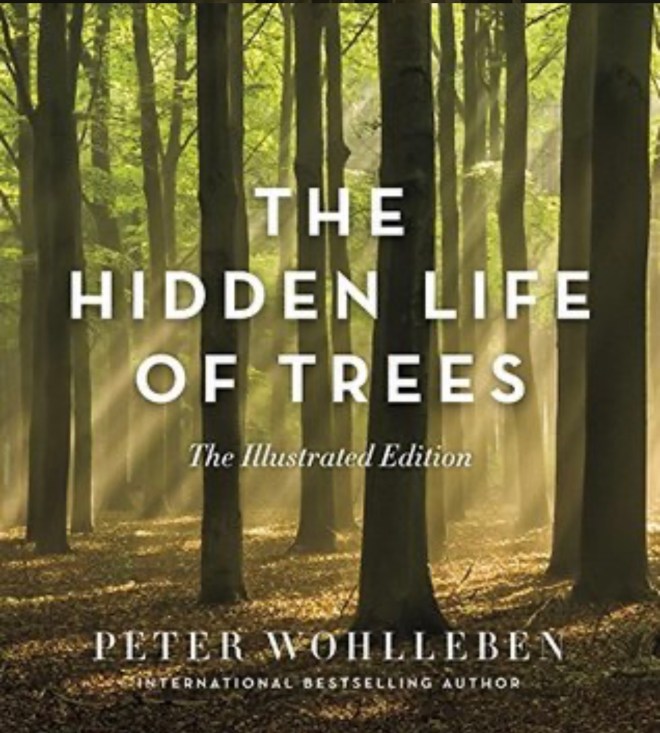
Most mornings, I sit at the kitchen table sipping my second cup of coffee while figuring out Wordle, Quordle and Octordle, to which I share my results on my family’s Wordle text thread. Afterward, before sitting down on the mat to meditate – I usually crack open the book I have strategically left there for me to read. I love learning about nature and walking in the woods throughout the year. So I was really excited when at Christmas, I received The Hidden Life of Trees – The Illustrated Edition.

The Hidden Life of Trees by Peter Wohlleben

My rating: 5 of 5 stars


What a beautiful book! The Hidden Life of Trees by Peter Wohlleben is an illustrated companion to his non-illustrated book of the same name. Wohlleben beautifully and simplistically presents his case for the unseen ways trees work within our environment in this abridged version. This book is for anyone interested in our environment, forests, and trees to enjoy. The photos are transcendingly magical, immediately transporting you to the woods no matter where you are sitting. You will want to go outside and be with the trees after reading.

When the month started I had already started listening to my next selection which I chose since it had been on my TBR list for over a year and was a Goodreads Choice Award and Nominee for Best Fantasy (2020).

The City We Became by N.K. Jemisin

My rating: 3 of 5 stars


The City We Became by N.K. Jemisin is an urban fantasy about major cities becoming sentient through human avatars. It’s a wild leap into a confusing, chaotic, multidimensional, supernatural world focused on New York City. A lot is going on in this book – just like the city – there are multiple characters with the narrative jumping around numerous POVs. There are various themes – too many to list.
I wanted to like this book more since I was born and raised in Manhattan and love books about or that take place in the city, but I had a tough time getting into this story. I liked the idea that a human avatar would embody the borough it’s from. I chuckled at how Jemisin includes how each borough feels about the other boroughs – particularly how they all felt about Staten Island. But the setup was slow and many times, I wasn’t sure what was happening; plus, I didn’t find any of the characters likable, which always makes loving the story more difficult. I like the premise, but it fell short for me.
I listened to the audiobook, which lasted 16 hours and 12 minutes. The narrator, Robin Miles, does an excellent job with the many voices. 3 Stars.

So far, at the end of March, I have finished reading 20 books and completed 34% of my goal of 59 books. Currently, I have six books that I am reading in rotation. One is the Bible which I have been trying to read and finish for about two years. I am reading along with “The Bible in a Year” podcast with Father Mike Schmitz on Audible. I’m only on day 90, but we have just started reading Judges and the Book of Ruth, so it’s exciting for me to be this far in. 

I am also chipping away at The Art of The Short Story and The Complete Grimm’s Fairy Tales. I have so many reading goals that I have set for myself. The little challenges get me excited about reading. I hope these reviews help anyone in selecting their next book to read and perhaps get them psyched for their next read or listen.

“Make it a rule never to give a child a book you would not read yourself.”

George Bernard Shaw (Irish playwright, critic, polemicist and political activist)


View all my reviews on Goodreads